Buy roditeli.eu ?
We are moving the project
roditeli.eu .
Are you interested in purchasing the domain
roditeli.eu ?
domain@kv-gmbh.de · 0541-91531010
Buy roditeli.eu ?
What happened to Yugoslavia?
Yugoslavia was a country in Southeast Europe that existed from 1918 to 2003. It was formed after World War I and consisted of several different ethnic groups, including Serbs, Croats, and Bosniaks. However, ethnic tensions and political conflicts eventually led to the breakup of Yugoslavia in the 1990s. This breakup resulted in a series of violent conflicts, including the Bosnian War and the Kosovo War. By 2003, the remaining parts of Yugoslavia had all become independent nations, including Serbia, Croatia, Bosnia and Herzegovina, Montenegro, North Macedonia, and Slovenia. **
Was Yugoslavia a democracy?
Yugoslavia was officially a socialist federal republic, and its political system was based on the principles of self-management and workers' councils. While it had elements of a multi-party system and periodic elections, the Communist Party held a dominant position in the government and society. This limited the true democratic nature of the country, as the ruling party had significant control over political and social life. Therefore, while Yugoslavia had some democratic features, it did not fully function as a liberal democracy. **

Similar search terms for Yugoslavia
Top-Angebote
Products related to Yugoslavia:
-
VitaEssence Vitamin D3 + K2 Wellness Food Supplement 120 caps.A food supplement. Vitamin D3 + K2 Food Supplement combines vitamin D3 with vitamin K2 to support bone health, calcium utilization, and immune function. Contributes to the maintenance of normal bones. Supports normal calcium absorption and utilization. Helps maintain normal muscle function. Contributes to the normal function of the immune system.21,70 £*Shipping: 5,22 £Secure redirect to the provider
-
Piccadilly Press How to Talk So Kids Can Learn at Home and in School - Adele Faber & Elaine Mazlish - Paperback - Bestselling Parenting & Education Guide for ParentsHow to Talk So Kids Can Learn at Home and in School is a practical guide from parenting experts Adele Faber and Elaine Mazlish. This book applies their renowned communication techniques to the challenges of learning, motivation, and school life, offering tools that can genuinely change how adults and children interact around education, homework, and classroom behaviour. Drawing on the same down-to-earth dialogues, real-life examples, and instantly recognisable cartoons that made Faber and Mazlish's earlier work a worldwide phenomenon, this book tackles the everyday frustrations parents and teachers face when trying to help children succeed academically. Written for parents and teachers alike, it provides a straightforward approach to helping children learn and succeed in school.5,99 £*Shipping: 2,99 £Secure redirect to the provider
-
Inspire Select 2025 AMOLED ECG Smart Watch Bluetooth Call NFC Fitness & Wellness Tracker blueStay connected while tracking your daily wellness with this advanced ECG smart watch designed for fitness, health monitoring, and smart convenience. Featuring a premium AMOLED smartwatch display, Bluetooth calling, NFC support, and intelligent...279,98 $*Shipping: 0,00 $Secure redirect to the provider
-
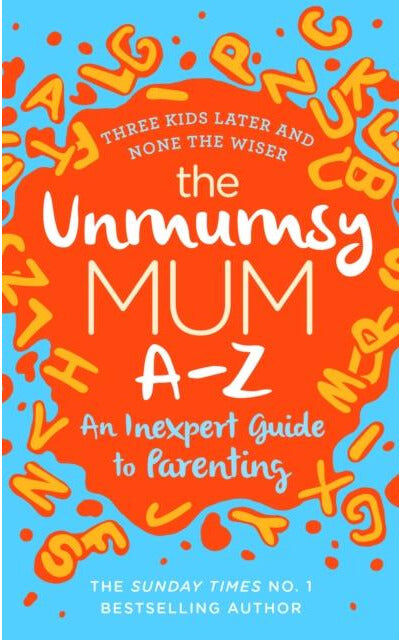
Transworld Publishers Ltd Books about parenting, The Unmumsy Mum A-Z - An Inexpert Guide to Parenting by Sarah Turner (Parenting Guide Book)From bestselling author and massively popular blogger The Unmumsy Mum comes this hilarious, irreverent and searingly candid compendium of parenting experiences. With entries including D is for Desperation, F is for Fish Fingers, S is for Supermum and V is for Vagina, it is safe to say this is not your average A-Z. This book wont tell you what sort of parent you should or should not be; instead, it offers a refreshingly honest account of what being a mum to three young children is really like and the surprising lessons that have been learned along the way. If you feel as though you are not measuring up or are struggling to cherish every moment, Sarah tales from the thick of it will reassure and resonate with you. Above all, her commitment to telling the truth, the whole truth and nothing but the truth will make you laugh out loud and remind you that you are, in fact, doing a great job. What readers are saying: For all parents out there, this is a must read. Absolutely hilarious and so true to life. 100 recommend. Makes me smile and actually keeps me sane as it is so easy to relate to. It made me laugh Sleeping through, it made me cry Xmas and it made me feel better about the times I think I am getting it wrong.1,99 £*Shipping: 1,99 £Secure redirect to the provider



-
What is Yugoslavia called today?
Yugoslavia is no longer a country. It dissolved in the early 1990s due to ethnic conflicts and is now split into several independent countries. These countries include Serbia, Croatia, Slovenia, Bosnia and Herzegovina, Montenegro, Kosovo, and North Macedonia. **
-
Is there really only an 8-year compulsory education in Yugoslavia?
No, there is no longer a country called Yugoslavia. The former country of Yugoslavia dissolved in the 1990s, and the territories that were part of Yugoslavia are now independent countries such as Serbia, Croatia, Bosnia and Herzegovina, Montenegro, North Macedonia, Kosovo, and Slovenia. Each of these countries has its own education system, and the length of compulsory education varies from country to country. **
-
How would Yugoslavia look like today?
It is difficult to predict exactly how Yugoslavia would look like today as there are many factors to consider. However, it is possible that the country would have faced challenges due to its diverse ethnic and religious makeup. There may have been ongoing tensions between different groups, potentially leading to political instability and conflict. On the other hand, if the country had managed to maintain unity and stability, it could have been a strong player in the region with a diverse and vibrant culture. **
-
Which language was spoken in Yugoslavia?
The main language spoken in Yugoslavia was Serbo-Croatian, which is a South Slavic language. This language was a combination of Serbian and Croatian dialects and was used as the official language of the country. Other languages spoken in Yugoslavia included Slovenian, Macedonian, and Albanian, reflecting the diverse ethnic makeup of the country. **


Is Yugoslavia a world power today?
No, Yugoslavia is not a world power today. In fact, Yugoslavia as a political entity ceased to exist in the 1990s, breaking up into several independent countries including Serbia, Croatia, Bosnia and Herzegovina, Montenegro, North Macedonia, and Slovenia. These individual countries do not hold the same level of global influence or power as the former Yugoslavia once did. Therefore, Yugoslavia is not a world power today. **
What is the problem regarding Yugoslavia?
The problem regarding Yugoslavia is the ongoing ethnic and political tensions that have persisted since the breakup of the country in the 1990s. The region has experienced violent conflicts and wars, resulting in the loss of thousands of lives and the displacement of millions of people. The unresolved issues of ethnic nationalism, territorial disputes, and political instability continue to hinder the progress and stability of the region. Additionally, the lack of reconciliation and accountability for war crimes and human rights abuses further complicates efforts to achieve lasting peace and stability in the former Yugoslav states. **
Top-Angebote
Products related to Yugoslavia:
-
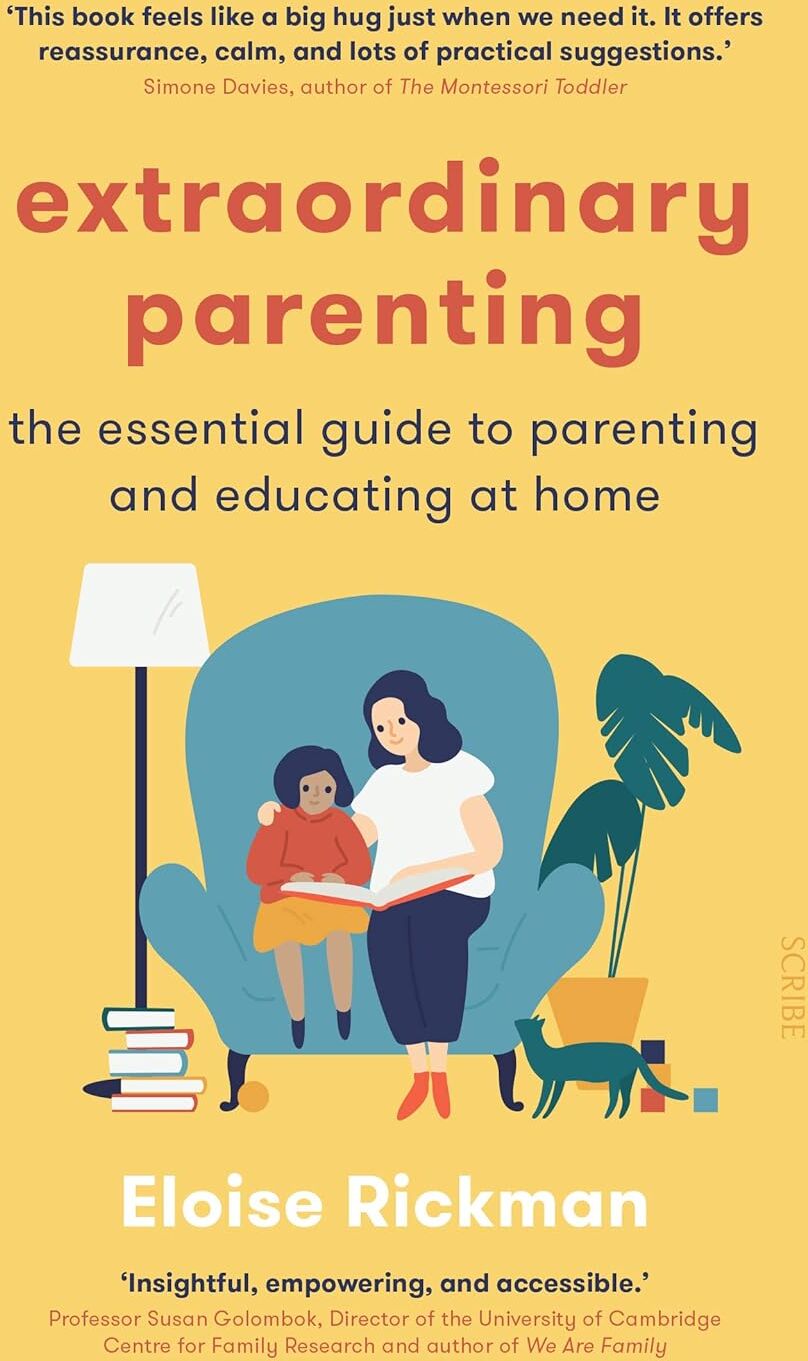
Scribe UK Extraordinary Parenting: The Essential Guide to Parenting and Educating at Home by Eloise Rickman - Paperback - Home Education & Parenting GuideA warm and practical companion for families choosing to learn together outside the classroom, this guide by Eloise Rickman offers reassurance, real strategies, and a rights-based approach to raising confident, independent children. Written by an experienced parenting coach, it moves past rigid timetables and worksheets, showing parents how genuine connection, secure routines, and a simplified home can spark curiosity naturally. Whether you're a full-time home educator or want more intentional learning in everyday life, this guide explores how everyday family life can become the richest classroom of all, drawing on the author's experience supporting home-educating families to explain how secure attachment underpins genuine curiosity and lifelong learning.5,49 £*Shipping: 2,99 £Secure redirect to the provider
-
Universal Stock Smart Watch With Bluetooth Calling ECG PPG Fitness And Wellness Tracking Smart Watch With Bluetooth Calling ECG PPG Fitness And Wellness TrackingStay connected and keep everyday wellness insights close at hand with the 1 pc of MT200 health monitoring smartwatch. Its crisp 1.43inch approx 466 x 466 AMOLED touchscreen makes calls, notifications, activity stats, and watch faces easy to view....119,97 $*Shipping: 0,00 $Secure redirect to the provider
-
VitaEssence Vitamin D3 + K2 Wellness Food Supplement 120 caps.A food supplement. Vitamin D3 + K2 Food Supplement combines vitamin D3 with vitamin K2 to support bone health, calcium utilization, and immune function. Contributes to the maintenance of normal bones. Supports normal calcium absorption and utilization. Helps maintain normal muscle function. Contributes to the normal function of the immune system.21,70 £*Shipping: 5,22 £Secure redirect to the provider
-
Piccadilly Press How to Talk So Kids Can Learn at Home and in School - Adele Faber & Elaine Mazlish - Paperback - Bestselling Parenting & Education Guide for ParentsHow to Talk So Kids Can Learn at Home and in School is a practical guide from parenting experts Adele Faber and Elaine Mazlish. This book applies their renowned communication techniques to the challenges of learning, motivation, and school life, offering tools that can genuinely change how adults and children interact around education, homework, and classroom behaviour. Drawing on the same down-to-earth dialogues, real-life examples, and instantly recognisable cartoons that made Faber and Mazlish's earlier work a worldwide phenomenon, this book tackles the everyday frustrations parents and teachers face when trying to help children succeed academically. Written for parents and teachers alike, it provides a straightforward approach to helping children learn and succeed in school.5,99 £*Shipping: 2,99 £Secure redirect to the provider
-
What happened to Yugoslavia?
Yugoslavia was a country in Southeast Europe that existed from 1918 to 2003. It was formed after World War I and consisted of several different ethnic groups, including Serbs, Croats, and Bosniaks. However, ethnic tensions and political conflicts eventually led to the breakup of Yugoslavia in the 1990s. This breakup resulted in a series of violent conflicts, including the Bosnian War and the Kosovo War. By 2003, the remaining parts of Yugoslavia had all become independent nations, including Serbia, Croatia, Bosnia and Herzegovina, Montenegro, North Macedonia, and Slovenia. **
-
Was Yugoslavia a democracy?
Yugoslavia was officially a socialist federal republic, and its political system was based on the principles of self-management and workers' councils. While it had elements of a multi-party system and periodic elections, the Communist Party held a dominant position in the government and society. This limited the true democratic nature of the country, as the ruling party had significant control over political and social life. Therefore, while Yugoslavia had some democratic features, it did not fully function as a liberal democracy. **
-
What is Yugoslavia called today?
Yugoslavia is no longer a country. It dissolved in the early 1990s due to ethnic conflicts and is now split into several independent countries. These countries include Serbia, Croatia, Slovenia, Bosnia and Herzegovina, Montenegro, Kosovo, and North Macedonia. **
-
Is there really only an 8-year compulsory education in Yugoslavia?
No, there is no longer a country called Yugoslavia. The former country of Yugoslavia dissolved in the 1990s, and the territories that were part of Yugoslavia are now independent countries such as Serbia, Croatia, Bosnia and Herzegovina, Montenegro, North Macedonia, Kosovo, and Slovenia. Each of these countries has its own education system, and the length of compulsory education varies from country to country. **
Similar search terms for Yugoslavia
-
Inspire Select 2025 AMOLED ECG Smart Watch Bluetooth Call NFC Fitness & Wellness Tracker blueStay connected while tracking your daily wellness with this advanced ECG smart watch designed for fitness, health monitoring, and smart convenience. Featuring a premium AMOLED smartwatch display, Bluetooth calling, NFC support, and intelligent...279,98 $*Shipping: 0,00 $Secure redirect to the provider
-
Transworld Publishers Ltd Books about parenting, The Unmumsy Mum A-Z - An Inexpert Guide to Parenting by Sarah Turner (Parenting Guide Book)From bestselling author and massively popular blogger The Unmumsy Mum comes this hilarious, irreverent and searingly candid compendium of parenting experiences. With entries including D is for Desperation, F is for Fish Fingers, S is for Supermum and V is for Vagina, it is safe to say this is not your average A-Z. This book wont tell you what sort of parent you should or should not be; instead, it offers a refreshingly honest account of what being a mum to three young children is really like and the surprising lessons that have been learned along the way. If you feel as though you are not measuring up or are struggling to cherish every moment, Sarah tales from the thick of it will reassure and resonate with you. Above all, her commitment to telling the truth, the whole truth and nothing but the truth will make you laugh out loud and remind you that you are, in fact, doing a great job. What readers are saying: For all parents out there, this is a must read. Absolutely hilarious and so true to life. 100 recommend. Makes me smile and actually keeps me sane as it is so easy to relate to. It made me laugh Sleeping through, it made me cry Xmas and it made me feel better about the times I think I am getting it wrong.1,99 £*Shipping: 1,99 £Secure redirect to the provider
-
ToSkin Balance Food Supplement for Wellness 30 caps. Expiration Date: 2027-04-30A food supplement for dull skin. Reduces fatigue and boosts energy levels. Strengthens the immune system. Supports digestive health with probiotics. Enhances skin vitality and radiance. Vitamins B3, B6, C: Combat fatigue and support immunity. Zinc and Copper: Protect cells and boost immunity. Spirulina, Chlorella, Açaí, Spinach: Improve digestion and well-being.10,49 £*Shipping: 4,12 £Secure redirect to the provider
-
Inspire Select 2025 AMOLED ECG Smart Watch Bluetooth Call NFC Fitness & Wellness Tracker redStay connected while tracking your daily wellness with this advanced ECG smart watch designed for fitness, health monitoring, and smart convenience. Featuring a premium AMOLED smartwatch display, Bluetooth calling, NFC support, and intelligent...279,98 $*Shipping: 0,00 $Secure redirect to the provider
-
How would Yugoslavia look like today?
It is difficult to predict exactly how Yugoslavia would look like today as there are many factors to consider. However, it is possible that the country would have faced challenges due to its diverse ethnic and religious makeup. There may have been ongoing tensions between different groups, potentially leading to political instability and conflict. On the other hand, if the country had managed to maintain unity and stability, it could have been a strong player in the region with a diverse and vibrant culture. **
-
Which language was spoken in Yugoslavia?
The main language spoken in Yugoslavia was Serbo-Croatian, which is a South Slavic language. This language was a combination of Serbian and Croatian dialects and was used as the official language of the country. Other languages spoken in Yugoslavia included Slovenian, Macedonian, and Albanian, reflecting the diverse ethnic makeup of the country. **
-
Is Yugoslavia a world power today?
No, Yugoslavia is not a world power today. In fact, Yugoslavia as a political entity ceased to exist in the 1990s, breaking up into several independent countries including Serbia, Croatia, Bosnia and Herzegovina, Montenegro, North Macedonia, and Slovenia. These individual countries do not hold the same level of global influence or power as the former Yugoslavia once did. Therefore, Yugoslavia is not a world power today. **
-
What is the problem regarding Yugoslavia?
The problem regarding Yugoslavia is the ongoing ethnic and political tensions that have persisted since the breakup of the country in the 1990s. The region has experienced violent conflicts and wars, resulting in the loss of thousands of lives and the displacement of millions of people. The unresolved issues of ethnic nationalism, territorial disputes, and political instability continue to hinder the progress and stability of the region. Additionally, the lack of reconciliation and accountability for war crimes and human rights abuses further complicates efforts to achieve lasting peace and stability in the former Yugoslav states. **
* All prices are inclusive of VAT and, if applicable, plus shipping costs. The offer information is based on the details provided by the respective shop and is updated through automated processes. Real-time updates do not occur, so deviations can occur in individual cases. ** Note: Parts of this content were created by AI.